Crimes and Misdemeanors is My Favorite Woody Allen Movie
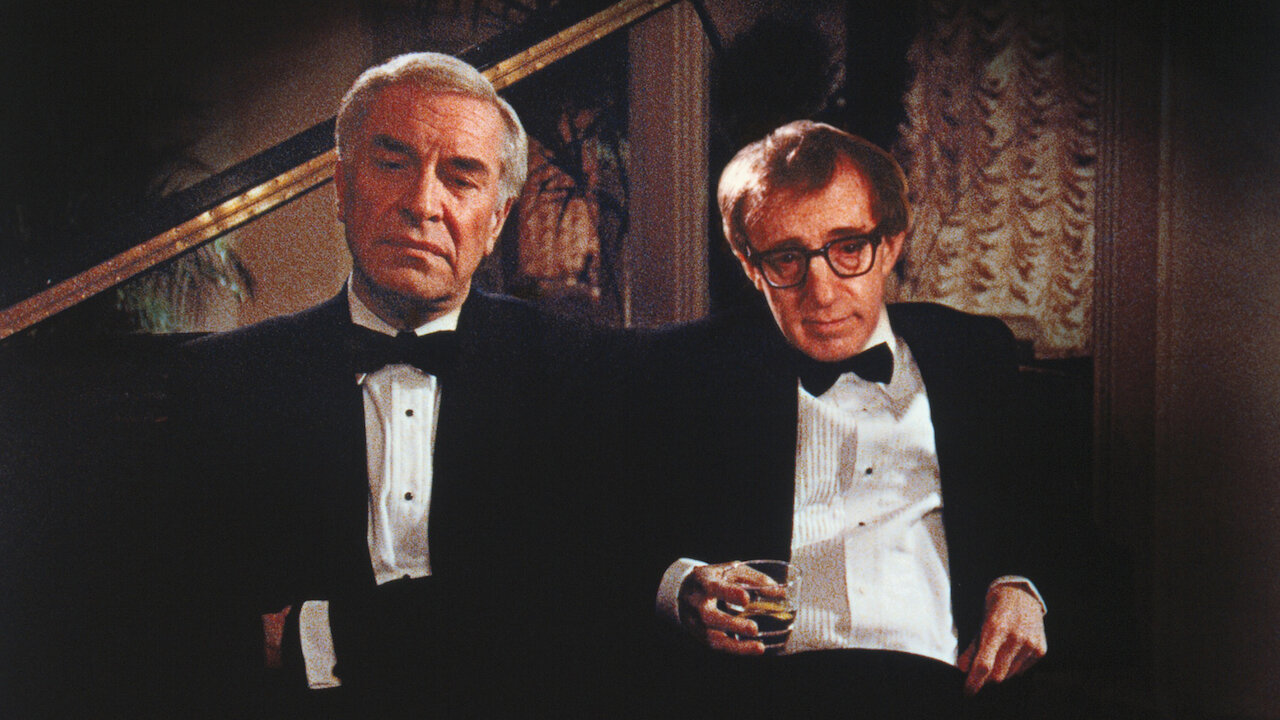
Woody Allen is one of my favorite people, one of my biggest inspirations. And out of the 50 or so movies he’s made, Crimes and Misdemeanors is my favorite of his.
The movie follows the stories of two characters. There’s Judah, a wealthy eye doctor who cheats on his wife. The woman he cheated with threatens to expose their relationship, so Judah hires someone to kill her.
Then there’s Clifford, a failing and broke documentary filmmaker who has to work for his Emmy-winning brother-in-law, Lester. Lester is boastful and uncomfortably flirts with many of his female co-workers. Clifford despises Lester. Clifford also falls in love with a woman. Eventually that woman ends up in a relationship with Lester. Oof.
Like with every other Woody Allen movie, it’s just so smart and funny. Most of the humor comes from Clifford’s story (played by Woody Allen himself). Clifford’s abrupt mocking, feigned expression of interest as Lester shares how a college is teaching courses about the existential motifs in Lester's situation comedies. Clifford’s reaction when he finds out a man took a shit on his sister.
And all throughout the movie Clifford is trying to piece together a documentary from footage of this person called Professor Louis Levy. Levy imparts profound lines on topics like the paradox of love, and finding meaning within the coldness of the universe. Levy is a completely fictional character, but it’s so well-written and convincing I thought it was a real person.
Just like with my favorite movie Lost in Translation, I deeply connect with Crimes and Misdemeanors because of how it uniquely depicts the problems I’ve faced in life, and the issues I’ve thought about.
After Judah succeeds in killing the woman he cheated with, he feels guilty for a bit. But eventually, he just forgets about it, and continues his life of wealth and privilege. That’s juxtaposed with his rabbi brother, a moral voice of reason throughout the film, who because of an illness gradually becomes blind. Professor Levy, who’s been spreading thoughtful lines on hope, eventually commits suicide.
And Clifford, regardless of his insecurities from his failing projects, and his jealousy towards his brother-in-law, still acts like a generous, sincere, hopeful person. Yet eventually, he loses the woman he loves to the person he most despises.
Now Clifford and Judah are distinct, and never meet throughout the movie until the end, where they fortuitously stumble upon each other at a family wedding (apparently they’re related through extended family). Judah shares an idea for a movie, which is basically a confession of how he killed his mistress, dressed up as a fictional story. Clifford argues the character shouldn’t be able to live with his guilt, but Judah says that’s not true—people can go on living. And the conversation ends.
Initially I was confused why they had what felt like two completely different stories and main characters in the same movie. Until I thought about it and realised why. Clifford is kind and does good, yet suffers. Judah kills someone, yet gets away with it. Their stories both reinforce the theme that people who do good often aren’t rewarded, and people who do evil often aren’t punished. The world feels indifferent, without cosmic justice. And the fact that both characters only encounter each other at the end to remind the audience of that thematic connection makes their understated meeting one of the most narratively satisfying endings in movie history.
I don’t believe in Judah’s conclusion, by the way. Whether you call it God or karma or something else, I believe there’s a force in this world that rewards good and punishes evil, but it might take awhile to come into effect. This movie unapologetically depicts the seeming indifference of the universe, yet still expresses a hope that people can choose to do good. From Professor Levy’s ending monologue: “It is only we, with our capacity to love, that give meaning to the indifferent universe.”
Woody Allen is a profound person. He’s neurotic, has been through decades of therapy, worries about dying every day. But he works hard, spreads joy with his movies, and loves his family. He’s been through immense suffering, most notably when he was falsely accused by his ex-wife of sexually abusing his daughter. Yet he still trudges on, making movies for over fifty years, being nominated for a gajillion Oscars (he never attends the ceremony), and still “gives meaning to the indifferent universe,” making a conscious choice every day to do good. I think Crimes and Misdemeanors best encapsulates that philosophy. What a movie. What a life.